
If you’re dealing with muscle pain, tightness, headaches or a nagging injury, you’ve probably seen both myotherapy and remedial massage offered — often at the same clinic. From the outside they look similar (both are hands-on, both work on soft tissue), but they’re built for different jobs. Choosing the right one saves you time, money and a lot of frustration.
At Complx Health in South Melbourne, we offer both under one roof, alongside physiotherapy and personal training, so your care is coordinated rather than piecemeal. This guide breaks down how the two differ, what each is best for, what happens in a session, and how to decide. If you already know you need clinical treatment, you can go straight to our myotherapy in South Melbourne page.
What is remedial massage?
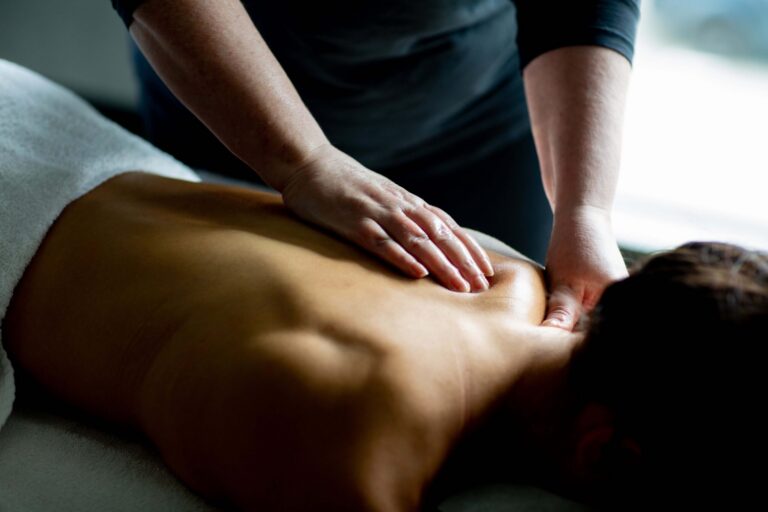
Remedial massage is a hands-on soft-tissue therapy focused on releasing muscle tension, improving circulation and supporting recovery. A remedial massage therapist uses deep-tissue work, trigger-point release, stretching and myofascial techniques to ease tight, overworked muscles and help your body relax and recover.
It’s the right choice when your main goal is relief and recovery rather than diagnosing a specific problem. Remedial massage is particularly effective for:
- General muscle soreness, tightness and stiffness
- Stress, tension and relaxation
- Post-workout and post-event recovery — though when you book it around training matters more than most people realise
- Improving mobility and flexibility
- Maintaining healthy muscles between heavier training blocks
Two related distinctions often come up at the booking stage: remedial vs relaxation massage (treatment versus a full-body routine, and which your health fund covers) and remedial vs deep tissue (an approach versus a technique). Learn more on our remedial massage in South Melbourne page.
What is myotherapy?
Myotherapy is a more clinical, assessment-driven approach to musculoskeletal pain and dysfunction. A qualified myotherapist is trained to assess your movement, posture and history, identify the root cause, and treat a wide range of muscle, joint and nerve-related conditions — not just the spot that hurts. Every session begins with an assessment before any treatment starts.
Myotherapy draws on a broader clinical toolkit, including:
- Dry needling to release deep trigger points and muscle tension
- Myofascial cupping to improve circulation and tissue mobility
- Trigger point therapy and deep soft-tissue techniques
- Joint mobilisation to restore range of movement
- Corrective exercise and rehab programming to stop the problem returning
Because it is diagnostic as well as hands-on, myotherapy suits more persistent, complex or recurring issues. At Complx, myotherapy is delivered by Anthony Garnier, our Senior Myotherapist, and can be coordinated directly with our physiotherapist and personal trainers. Explore the full service, pricing and conditions treated on our myotherapy in South Melbourne page.
Myotherapy vs remedial massage: the key differences
| Aspect | Myotherapy | Remedial Massage |
|---|---|---|
| Approach | Clinical — assessment and diagnosis first | Hands-on treatment of tight, sore muscles |
| Techniques | Dry needling, cupping, joint mobilisation, soft tissue, rehab exercises | Deep tissue, trigger point, stretching, myofascial techniques |
| Best for | Chronic pain, injuries, nerve/joint issues, posture, prevention | Muscle tightness, relaxation, recovery, general maintenance |
| Goal | Find and fix the root cause; long-term management | Short-term relief and reduced tension |
| Referral | Not required | Not required |
| Health fund | Claimable on most extras (HICAPS on the spot) | Claimable on most extras (HICAPS on the spot) |
Where physiotherapy fits
These two aren’t the only options, and a third question follows closely behind this one. Physiotherapy is an AHPRA-registered profession with a broader scope — joints, ligaments, tendons and nerves as well as muscle — and it’s the right call for a diagnosed injury, post-surgical rehabilitation or anything with neurological features. If your problem involves an injury event rather than accumulated tightness, read physiotherapy vs myotherapy before booking either.
Which conditions does each treat?
Myotherapy is well suited to:
- Chronic neck, back and shoulder pain
- Sciatica and nerve-related pain
- Tension headaches and jaw pain
- TMJ / jaw pain
- Sports injuries and repetitive strain injuries (RSI)
- Tennis elbow, golfer’s elbow and other tendinopathies
- Postural and desk / workplace-related pain
- Pre- and post-surgery rehabilitation
- Recurring pain that hasn’t resolved with rest or massage alone
Remedial massage is well suited to:
- General muscle tightness and soreness
- Stress and tension relief
- Delayed-onset muscle soreness (DOMS) after training
- Recovery between events or heavy sessions
- Maintaining mobility and flexibility
What happens in a session?
A remedial massage session
After a short chat about where you’re tight or sore, your therapist works directly on those muscles using hands-on techniques for most of the session (typically 45–60 minutes). You leave feeling looser and more relaxed, with improved circulation and mobility.
A myotherapy session
Your myotherapist starts with an assessment — movement, posture and injury history — to find what’s actually driving your pain. Treatment then combines the right mix of dry needling, cupping, soft-tissue work and joint mobilisation, and you leave with a clear plan and, where needed, corrective exercises to prevent the issue returning.
Cost, health funds and HICAPS
Both myotherapy and remedial massage are $110 for 45 minutes and $130 for 60 minutes at Complx, and both are claimable on most private health “extras” cover. You can claim on the spot with HICAPS — you only pay the gap. No GP referral is needed for either. For the detail on what your fund will and won’t cover, see claiming remedial massage on private health insurance, or the myotherapy and remedial massage service pages.
Can you combine myotherapy and remedial massage?
Absolutely — and many clients do. A common pattern is myotherapy to assess and resolve a specific problem, then remedial massage for ongoing maintenance and recovery. Because Complx also offers physiotherapy and personal training from the same South Melbourne clinic, your practitioners coordinate directly, so treatment and training reinforce each other instead of conflicting. That coordination is the point of an integrated health team, and it matters most when a problem keeps coming back.
How to choose: a quick guide
- Choose remedial massage if you want to release tightness, de-stress, or recover after training.
- Choose myotherapy if you have chronic, complex or recurring pain, an injury, or you want the root cause found and a plan to fix it.
- Not sure? Book myotherapy — the initial assessment will tell you exactly what you need.
Frequently asked questions
Is myotherapy better than remedial massage?
Neither is “better” — they’re built for different goals. Myotherapy is clinical and diagnostic, ideal for pain, injuries and recurring problems. Remedial massage is ideal for tension release, relaxation and recovery.
Do I need a referral for myotherapy or remedial massage?
No. You can book either directly at Complx Health in South Melbourne — no GP referral required. The same applies to physiotherapy in Australia.
Can I claim myotherapy and remedial massage on private health insurance?
Yes, both are claimable on most private health extras cover. We process claims on the spot with HICAPS, so you only pay the gap. Note that some funds pool limits across therapy types, so it’s worth checking before planning a course of treatment.
Does dry needling hurt?
Most people feel only a small prick, sometimes a brief muscle twitch as a trigger point releases. It’s well tolerated and your myotherapist adjusts to your comfort — here’s what a session actually feels like, including who should mention things beforehand.
How often should I book?
For an active issue, weekly or fortnightly sessions are common until it settles; for maintenance, many clients come monthly. The interval should stretch as you improve — how often to book myotherapy covers what a reasonable schedule looks like and when more sessions isn’t the answer.
Book myotherapy or remedial massage in South Melbourne
Complx Health is at 101 Moray Street, South Melbourne. If you want the root cause assessed and a plan to fix it, book myotherapy in South Melbourne. If you’re after relief and recovery, book remedial massage. 👉 Book your session today and take the first step towards a healthier, pain-free body.